How U.S. law firms are building legal teams that actually stays — backed by four
years of hiring data from the law firm where the model was built.
Who this guide is for
You're in the right place if…
You're the owner, managing partner, or operations lead — the person who feels it when someone quits, because every empty seat lands on your desk.
You run a high-volume practice — personal injury, immigration, family law, criminal defense — where intake, paralegals, and case managers are the engine.
You've hired, lost, and re-hired the same role more than once in the last couple of years.
You've considered remote or nearshore talent but got burned, or assumed your roles are too judgment-heavy to hand off.
You're a solo through midsize firm, where a wrong hire is felt by everyone.
You serve Spanish-speaking clients — because this model has a built-in advantage most firms can't access.
The problem isn't hiring.
It's the revolving door.
Most firm owners think they have a hiring problem. So they do more of it — more job posts, more interviews, more recruiters, maybe a signing bonus. They're trying to win a game by playing it faster. Hiring harder.
Here's what's actually happening. Every firm runs the same five-stage process — recruiting, interviewing, hiring, building a bench, onboarding. That's 25-plus tasks across five stages, repeated forever. And most firms simply absorb the cost of doing it manually, over and over, every single time someone leaves.
Recruiting
Posts, sourcing, screening — from zero, every time.
Interviewing
Hours of partner and staff time pulled off billable work.
Hiring
Offers, negotiation, paperwork, compliance.
Building a bench
Which almost no firm has time to actually do.
Onboarding
Months before the seat produces — then the clock resets when they leave.
So the real question isn't "how do I hire faster?" It's "why do I keep having to?"
Every departure resets the clock — you re-hire, you re-train, you rebuild the client relationships and the team relationships. That's not a hiring cost. That's a revolving-door cost, and if it's anywhere in your firm, it's draining you at every level, whether or not you can see it on a P&L.
You don't need to get better at hiring. You need to stop having to.
Four years of data — from our own firm
This model wasn't dreamed up to sell. It was built inside a working law firm — Farmer Law, an immigration firm in Austin — because that firm was bleeding from the revolving door and needed a fix for itself.
Farmer Law did something almost no firm ever does: it tracked its own hiring for four years. Same firm, same roles — paralegals, legal assistants, intake, case managers — two workforces side by side. 54 nearshore hires. 66 U.S.-based hires. Same window. Here's what the books showed:
BETTER RETENTION THAN COMPARABLE U.S. HIRES
LOWER VOLUNTARY TURNOVER
LOWER COST OF TURNOVER
LOWER NEW-HIRE FAILURE RATE
The U.S. new-hire failure rate in the dataset was almost 23%. The nearshore failure rate was under 4%. In that same data, nearly a quarter of U.S. hires left before their first year was over — and every one of those departures reset the clock.
These aren't an anonymous case study. They're live numbers from a real firm — which is exactly why we can show all of them, and why we're not afraid of a single follow-up question.
The fix wasn't hiring harder. It was replacing episodic, start-from-zero recruiting with a managed talent system built to make people stay. The next two shifts show how that system works — and what it costs.
The questions every owner asks
How is this different from a virtual assistant company?
Structurally. VA platforms match you with a generalist contractor through an opaque bundled rate, then disappear. We place career-level professionals into defined roles, run the selection, onboarding, coaching, and compliance around them — and for judgment-heavy roles, train them inside your firm first. They hand you a resume. We stick around.
Why nearshore instead of offshore?
Three things that decide whether remote work holds inside a law firm: your time zone (real-time collaboration, same-day responsiveness), full English–Spanish bilingual fluency benchmarked to industry standards, and cultural proximity to how U.S. firms actually operate. Offshore models can't replicate any of the three.
What if the person doesn't work out?
Every placement carries a 90-day fit guarantee — replacement at no additional recruiting cost, billing suspended during the transition. And because we monitor performance with structured check-ins, most issues get coached early, long before a replacement is on the table.
Are these real employees or contractors?
Real employees. During the remote phase we serve as employer of record with full compliance under the labor law of the participant's home country — statutory benefits, protections, the works. No 1099-and-a-handshake arrangements.
The data comes from Farmer Law — doesn't that make it biased?
It makes it verifiable. This isn't a vendor's anonymous case study; it's four years of first-party hiring records from the firm the model was built inside. We're happy to walk any firm through the anonymized data, line by line, on a Strategy Session.
How fast can someone actually start?
It depends on the role and the pathway — which is exactly what the Role Blueprint and timeline on your Strategy Session are for. You'll leave that call with a realistic answer for your specific seat, not a generic promise.
Map this onto your firm — free
You now know the what and the why. The only question left is what this looks like in your firm — which roles, which pathway, what timeline, what it would actually save you. That's what a Strategy Session is for. Not a sales pitch dressed up as a call — an actual working session about your firm. Here's what you walk away with:
We help law firms build the teams they've always needed — wherever the talent lives.
Reliable Futures places career-level LATAM legal professionals into U.S. law firms through two pathways — Onsite First and Remote First — backed by structured selection, employer-of-record compliance, ongoing coaching, and a 90-day fit guarantee. The model was proven inside an operating law firm before it was ever offered to clients.
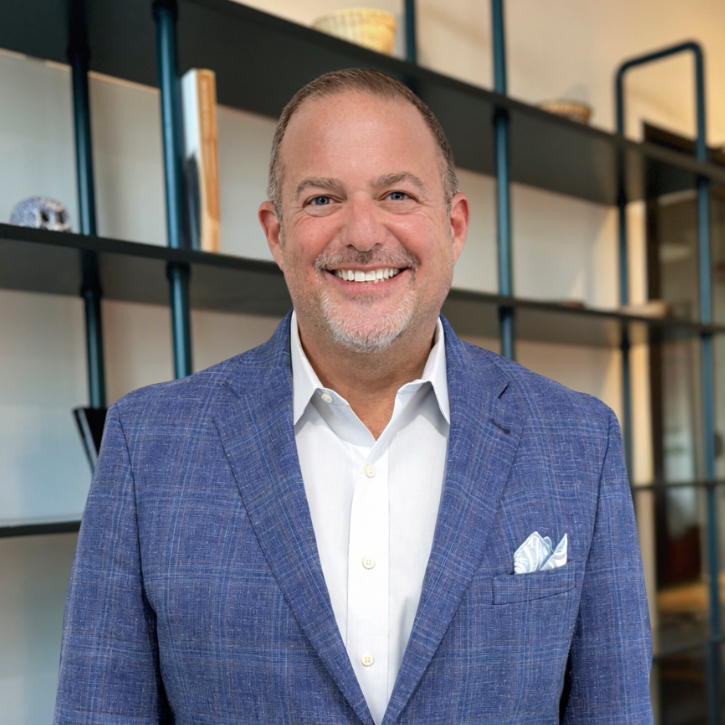
Brian Robinson is President of Reliable Futures — a licensed attorney, former President & CEO of a national legal services company, and a fractional CEO to more than 150 law firms. He built Reliable Futures because he spent years watching firms underserved by a market that prioritized margin over people.
Reliable Futures · Nearshore Legal Professionals for U.S. Law Firms
How U.S. law firms are building legal teams that actually stays — backed by four years of hiring data from the law firm where the model was built.
Who this guide is for
You're in the right place if…
You're the owner, managing partner, or operations lead — the person who feels it when someone quits, because every empty seat lands on your desk.
You run a high-volume practice — personal injury, immigration, family law, criminal defense — where intake, paralegals, and case managers are the engine.
You've hired, lost, and re-hired the same role more than once in the last couple of years.
You've considered remote or nearshore talent but got burned, or assumed your roles are too judgment-heavy to hand off.
You're a solo through midsize firm, where a wrong hire is felt by everyone.
You serve Spanish-speaking clients — because this model has a built-in advantage most firms can't access.
The problem isn't hiring.
It's the revolving door.
Most firm owners think they have a hiring problem. So they do more of it — more job posts, more interviews, more recruiters, maybe a signing bonus. They're trying to win a game by playing it faster. Hiring harder.
Here's what's actually happening. Every firm runs the same five-stage process — recruiting, interviewing, hiring, building a bench, onboarding. That's 25-plus tasks across five stages, repeated forever. And most firms simply absorb the cost of doing it manually, over and over, every single time someone leaves.
Recruiting
Posts, sourcing, screening — from zero, every time.
Interviewing
Hours of partner and staff time pulled off billable work.
Hiring
Offers, negotiation, paperwork, compliance.
Building a bench
Which almost no firm has time to actually do.
Onboarding
Months before the seat produces — then the clock resets when they leave.
So the real question isn't "how do I hire faster?" It's "why do I keep having to?"
Every departure resets the clock — you re-hire, you re-train, you rebuild the client relationships and the team relationships. That's not a hiring cost. That's a revolving-door cost, and if it's anywhere in your firm, it's draining you at every level, whether or not you can see it on a P&L.
You don't need to get better at hiring. You need to stop having to.
Four years of data — from our own firm
This model wasn't dreamed up to sell. It was built inside a working law firm — Farmer Law, an immigration firm in Austin — because that firm was bleeding from the revolving door and needed a fix for itself.
Farmer Law did something almost no firm ever does: it tracked its own hiring for four years. Same firm, same roles — paralegals, legal assistants, intake, case managers — two workforces side by side. 54 nearshore hires. 66 U.S.-based hires. Same window. Here's what the books showed:
BETTER RETENTION THAN COMPARABLE U.S. HIRES
LOWER VOLUNTARY TURNOVER
LOWER COST OF TURNOVER
LOWER NEW-HIRE FAILURE RATE
The U.S. new-hire failure rate in the dataset was almost 23%. The nearshore failure rate was under 4%. In that same data, nearly a quarter of U.S. hires left before their first year was over — and every one of those departures reset the clock.
These aren't an anonymous case study. They're live numbers from a real firm — which is exactly why we can show all of them, and why we're not afraid of a single follow-up question.
The fix wasn't hiring harder. It was replacing episodic, start-from-zero recruiting with a managed talent system built to make people stay. The next two shifts show how that system works — and what it costs.
The questions every owner asks
How is this different from a virtual assistant company?
Structurally. VA platforms match you with a generalist contractor through an opaque bundled rate, then disappear. We place career-level professionals into defined roles, run the selection, onboarding, coaching, and compliance around them — and for judgment-heavy roles, train them inside your firm first. They hand you a resume. We stick around.
Why nearshore instead of offshore?
Three things that decide whether remote work holds inside a law firm: your time zone (real-time collaboration, same-day responsiveness), full English–Spanish bilingual fluency benchmarked to industry standards, and cultural proximity to how U.S. firms actually operate. Offshore models can't replicate any of the three.
What if the person doesn't work out?
Every placement carries a 90-day fit guarantee — replacement at no additional recruiting cost, billing suspended during the transition. And because we monitor performance with structured check-ins, most issues get coached early, long before a replacement is on the table.
Are these real employees or contractors?
Real employees. During the remote phase we serve as employer of record with full compliance under the labor law of the participant's home country — statutory benefits, protections, the works. No 1099-and-a-handshake arrangements.
The data comes from Farmer Law — doesn't that make it biased?
It makes it verifiable. This isn't a vendor's anonymous case study; it's four years of first-party hiring records from the firm the model was built inside. We're happy to walk any firm through the anonymized data, line by line, on a Strategy Session.
How fast can someone actually start?
It depends on the role and the pathway — which is exactly what the Role Blueprint and timeline on your Strategy Session are for. You'll leave that call with a realistic answer for your specific seat, not a generic promise.
Map this onto your firm — free
You now know the what and the why. The only question left is what this looks like in your firm — which roles, which pathway, what timeline, what it would actually save you. That's what a Strategy Session is for. Not a sales pitch dressed up as a call — an actual working session about your firm. Here's what you walk away with:
We help law firms build the teams they've always needed — wherever the talent lives.
Reliable Futures places career-level LATAM legal professionals into U.S. law firms through two pathways — Onsite First and Remote First — backed by structured selection, employer-of-record compliance, ongoing coaching, and a 90-day fit guarantee. The model was proven inside an operating law firm before it was ever offered to clients.
Brian Robinson is President of Reliable Futures — a licensed attorney, former President & CEO of a national legal services company, and a fractional CEO to more than 150 law firms. He built Reliable Futures because he spent years watching firms underserved by a market that prioritized margin over people.
Reliable Futures · Nearshore Legal Professionals for U.S. Law Firms